
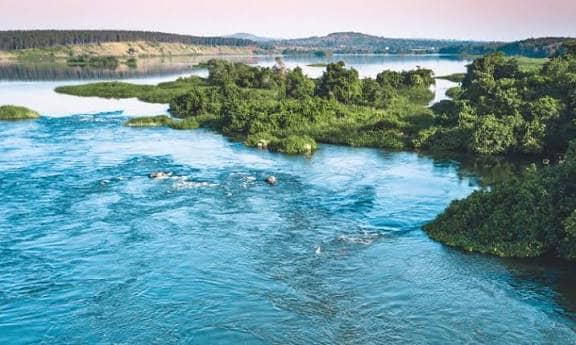
A coalition of 116 civil society organisations and three individuals from 35 countries has called on Uganda, Kenya and Tanzania to initiate a transparent, community-led process to assess Lake Victoria for possible nomination as a UNESCO World Heritage Site.
The call was made ahead of the 48th session of the World Heritage Committee meeting in Busan, South Korea, where the organisations said the lake presents an opportunity for regional cooperation on heritage conservation, environmental protection and community participation.
The organisations urged the three East African countries, with support from the United Nations Educational, Scientific and Cultural Organisation (UNESCO), the World Heritage Committee, the East African Community (EAC) and other international partners, to begin consultations on a potential nomination pathway.
They said Lake Victoria should be recognised as a living cultural landscape, with any assessment covering the lake, its watershed, islands, shorelines, wetlands, tributaries, cultural sites and communities that depend on it.
The coalition said the process should build on existing UNESCO tentative listings for geometric rock art in the Lake Victoria Region, while allowing experts and communities to determine whether the eventual nomination should fall under cultural, natural or mixed cultural-natural heritage categories.
“We have demonstrated that Lake Victoria’s exceptional biodiversity, fisheries, wetlands, islands, sacred sites, cultural heritage, and traditional knowledge together represent an Outstanding Universal Value worthy of international recognition,” said Cirrus Kabaale, Chief Executive Officer of Strategic Response on Environmental Conservation (STREC).
Lake Victoria is Africa’s largest lake by surface area and the world’s largest tropical lake. It is shared by Uganda, Kenya and Tanzania, with its wider basin extending into Rwanda and Burundi.
The lake is also part of the Nile River system, making its management important for regional water security, wetland conservation, pollution control and transboundary freshwater governance.
For communities living around the lake, the organisations said Lake Victoria represents more than a water body, describing it as a source of livelihoods, cultural identity, spiritual connection, traditional knowledge and ecological practices.
“We are calling for a transparent, science-based and community-led assessment that examines the lake, its islands, wetlands, tributaries, cultural sites, fishing communities and living traditions before any nomination pathway or boundaries are determined,” said Bwengye Rajab Yusufu, Executive Director of the National Association of Professional Environmentalists (NAPE).
The coalition also raised concerns over developments linked to the East African Crude Oil Pipeline (EACOP) and other oil-related activities in the wider Lake Victoria Basin.
Although the pipeline does not directly cross Lake Victoria, the organisations said activities within the basin could affect rivers, wetlands and catchment areas connected to the lake.
“Lake Victoria faces mounting environmental and social pressures. Our warning is that impacts can move through tributaries, wetlands, catchments and connected ecosystems, affecting water quality, fisheries, cultural heritage, food security and livelihoods,” said Doreen Namara, Executive Director at Liberty Probono Initiative (LPI).
The organisations are calling for the establishment of a joint taskforce involving governments, communities, scientists and conservation experts to guide the assessment process.
They also want stronger governance of the lake and a precautionary approach to oil, gas and other major infrastructure developments within the Lake Victoria Basin.
The coalition further urged UNESCO, international partners and regional institutions to support community mapping, scientific research, ecological assessments and cultural documentation as part of the proposed process.
